Key Takeaways
- Zero Trust Architecture replaces traditional perimeters with constant verification of every user and device.
- Cloud-Native Application Protection Platforms (CNAPPs) offer unified multicloud security management and visibility.
- Continuous risk assessment and automated vulnerability detection fortify cloud defenses against emerging threats.
Table of Contents
- Zero Trust Architecture: A Paradigm Shift
- Cloud-Native Application Protection Platforms (CNAPPs)
- Continuous Risk Assessment and Automated Vulnerability Management
- Strengthening Identity and Access Controls
- Data Encryption at Every Stage
- Fostering Collaboration Between Security and Development Teams
- Future Trends in Cloud Security
- Conclusion
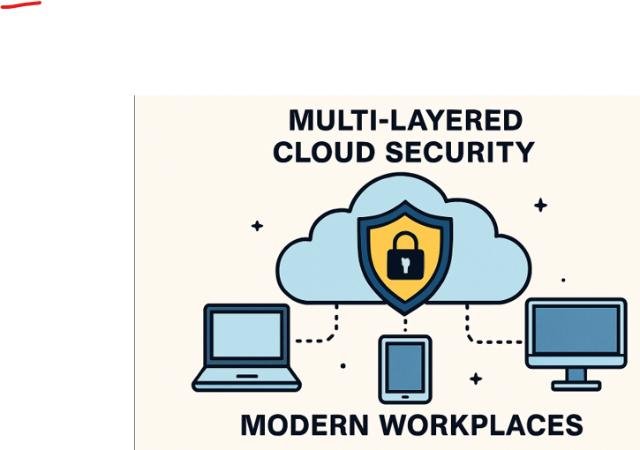
As organizations transition to the cloud and remote work becomes the norm, robust security measures are essential to safeguard data and operations. Modern cloud security demands strategies that evolve alongside increasingly sophisticated cyber threats. One of the most effective approaches is to implement layered defenses, combining strong regulatory compliance, continuous monitoring, and technologically advanced tools such as SASE security solutions, early in your digital strategy. This integration enables companies to secure data both in motion and at rest while ensuring that access policies keep pace with dynamic work environments.
In an era where the digital workplace spans multiple devices, users, and networks, organizations can no longer rely solely on traditional perimeter security. Ensuring business continuity and data protection now requires adopting a strategic, comprehensive security approach. As more applications and workloads move to the cloud, the risks multiply, compelling organizations to reconsider their defenses and make security a shared responsibility across their teams. This article outlines the foundations of strong cloud security, including identity management, automated risk assessment, and the integration of security with development and operations. By understanding and implementing these strategies, organizations can better address modern threats and support ongoing innovation and collaboration in the digital workplace. Businesses must also stay updated on future trends, including AI-driven threat detection and more sophisticated zero-trust models, to remain prepared for the evolving threat landscape.
Zero Trust Architecture: A Paradigm Shift
The perimeter-based security model is now outdated due to the rise in cloud adoption and the geographically dispersed nature of workforces. Zero Trust Architecture (ZTA) introduces a fundamental shift: every access request is treated as if it originated from an open network. This means continuous user and device verification, monitoring, and authorization. The principle of “never trust, always verify” drastically limits lateral movement by potential attackers, as every access attempt is thoroughly checked regardless of the origin.
Cloud-Native Application Protection Platforms (CNAPPs)
Multicloud environments complicate security management, creating silos and visibility gaps. Cloud-Native Application Protection Platforms, or CNAPPs, integrate diverse security capabilities to provide a comprehensive view of cloud resources and threats. Tools like Microsoft’s Defender for Cloud seamlessly bridge platforms, enabling real-time threat detection and remediation of misconfigurations. This is vital for organizations managing assets across public, private, and hybrid cloud environments, as it consolidates compliance, monitoring, and automated defenses into a single pane of glass. Read more about advances in multicloud security on Microsoft’s security blog.
Continuous Risk Assessment and Automated Vulnerability Management
Security is not a one-time initiative. Automated tools and processes are central to continuous risk assessment in the cloud. Integrating security directly into DevOps through the DevSecOps approach ensures risks are evaluated and prioritized throughout the software development lifecycle. Automated scans identify and patch vulnerabilities promptly, reducing the attack surface and supporting compliance with rapidly changing regulations. This automation not only reduces human error but also allows organizations to scale their defenses as they grow.
Strengthening Identity and Access Controls
Effective Identity and Access Management (IAM) stands at the heart of cloud security. Implementing multifactor authentication (MFA) creates a barrier against credential theft. Organizations should enforce least privilege policies, ensuring that users and applications access only the resources required for their roles. Regular permission audits and the adoption of phishing-resistant authentication methods further reduce potential entry points for attackers.
Data Encryption at Every Stage
Protecting sensitive business data is nonnegotiable. Encryption must cover all angles, at rest, in transit, and during processing. By leveraging centralized key management solutions, organizations gain tighter control over who can decrypt or access critical data.
Fostering Collaboration Between Security and Development Teams
Traditionally, security was tacked on late in the development process, which often slowed project delivery. By embracing a DevSecOps culture, where security considerations are woven into each development stage, teams collaborate more efficiently and address threats proactively. Early involvement of security experts enables faster identification and resolution of vulnerabilities, reducing risks without hindering innovation, as this shift toward shared responsibility results in more robust, resilient digital products.
Future Trends in Cloud Security
Cloud security is rapidly evolving to address emerging risks. Data sovereignty is also receiving greater attention as organizations navigate complex regulations and cross-border data flows. Expect future iterations of Zero Trust models to become even more granular and adaptive, offering dynamic policy enforcement based on real-time analytics.
Conclusion
Securing the digital workplace requires organizations to adopt a comprehensive cloud security strategy that addresses current risks and anticipates future challenges. Embracing Zero Trust Architecture, unified cloud security platforms, continuous risk assessment, and collaborative development practices collectively fortifies digital environments against rapidly evolving cyber threats. Organizations that build security into every aspect of their cloud journey can protect sensitive information and enable growth and innovation with confidence.If you need more information to TECH FIVERS visit.