Key Takeaways
- Live bus data can help districts respond more clearly to delays, closures, weather, and route changes.
- Useful family updates should be timely, plain-language, and limited to information people need.
- GPS and route data should support trained drivers and dispatchers, not replace their judgment.
- Strong privacy rules, access controls, and backup procedures are essential before a district expands a tracking program.
- A focused pilot gives transportation leaders a practical way to test results before a fleetwide rollout.
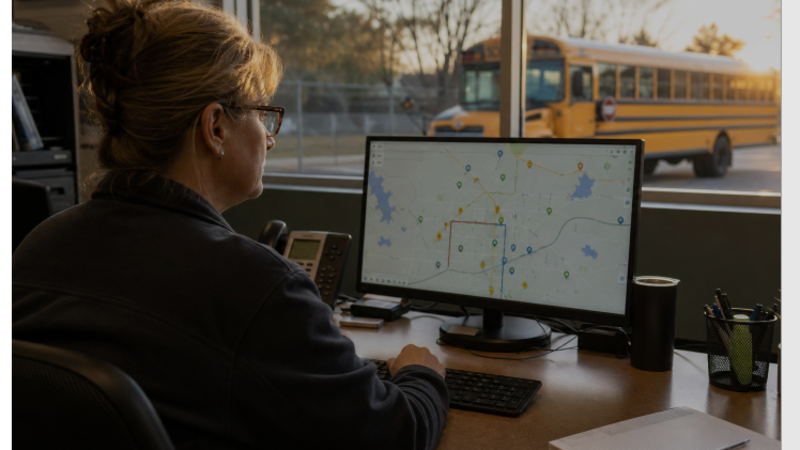
School transportation teams make dozens of time-sensitive decisions every day. A late-starting bus, a substitute driver, road construction, heavy traffic, severe weather, or a student schedule change can quickly affect schools, families, and dispatch staff. When teams rely on phone calls and incomplete updates, even a small disruption can create uncertainty across an entire route. Real-time information gives transportation staff a clearer operating picture. District leaders who want to learn more about school bus GPS tracking can start by considering how location, route progress, and estimated arrival information could improve decisions without adding unnecessary complexity for drivers or families.
Why Transportation Decisions Need Better Data
Transportation offices often need to answer the same questions repeatedly: Has the bus left the yard? Is it still on the planned route? Which stops will be affected? Does the driver need help? Without a shared view of current operations, dispatchers may spend valuable time confirming basic details instead of coordinating a response. Real-time data can reduce that uncertainty by showing where a vehicle is, how it is progressing against the schedule, and whether an issue is isolated or likely to affect the full route. It does not make every delay avoidable, but it can help staff replace vague updates with informed decisions.
What Real-Time Bus Data Can Show
A well-configured system may provide a useful operational view that includes:
- Current vehicle location and route progress.
- Estimated arrival times for upcoming stops.
- Differences between planned and actual route timing.
- Unexpected stops, detours, or missed route segments.
- Delays connected to traffic, weather, or road closures.
- Basic trip history for later service reviews.
Data still requires context. GPS accuracy can vary with device performance, cellular coverage, route setup, and local conditions. A map may show that a bus has stopped, but dispatchers may still need to contact the driver to understand whether the cause is traffic, a mechanical concern, a student issue, or a safety situation.
Faster Responses to Common Delays
A consistent response process can help teams act quickly without rushing to conclusions:
- Confirm the bus location and current status.
- Determine whether the delay affects one stop or the entire route.
- Contact the driver when clarification or assistance is needed.
- Notify affected schools and families with a specific update.
- Record the cause, actions taken, and final resolution.
For example, a crash on a main road may force Daily Operations a bus onto a slower detour. Instead of telling families that the bus is “running late,” staff can confirm the affected area, estimate the scope of the delay, and communicate that the route is continuing on an alternate path. That update is more useful because it explains what happened and what families should expect next.
Clearer Communication With Families
Families benefit most from alerts that answer a practical question: When should we be ready, and what should we do now? A short message about a 15-minute delay, a changed pickup location, or a canceled afternoon run can reduce confusion when it arrives soon enough to guide action. Districts should create separate message templates for delays, cancellations, route changes, and emergencies. Alerts should use plain language, identify the affected route or stop when appropriate, and avoid unnecessary operational details. Sending too many low-value messages can make urgent updates easier to miss.
Helping Drivers Stay Focused
Accurate route information can reduce last-minute confusion, particularly for substitute drivers or drivers covering unfamiliar areas. However, safe operation Daily Operations must remain the priority. Drivers should not be expected to interact with a mobile device while the bus is moving. Dispatchers should manage changes, and driver-facing tools should be simple, hands-free where possible, and used in accordance with district policy. Route efficiency cannot override safe stop design either. When reviewing stops and travel paths, districts can use guidance to plan safer school bus stops and routes, keeping visibility, student crossing needs, and roadway conditions central to decision-making.
Using Data to Improve Routes
Trip records are most valuable when leaders Daily Operations look for patterns over time rather than judge a route by a single difficult day. Transportation teams can compare planned and actual travel times, identify repeated bottlenecks, find route overlaps, and review stops that regularly create long waits. Those findings can support schedule adjustments, clearer driver directions, or revised routing. Yet efficiency has limits. A shorter route is not automatically a better route if it creates unsafe stop locations, unreasonable ride times, accessibility barriers, or problems for students with individual transportation needs.
Supporting Emergency Decisions
During an incident, current vehicle locations can help transportation leaders identify buses near the affected area and determine which schools or families may need updates. Verified information can then be shared through established channels with school leaders and first responders. Tracking data is only one part of emergency readiness. Districts still need driver training, written dispatch procedures, drills, direct communication methods, and manual backup plans for situations involving a loss of signal, a power outage, or a system failure.
Privacy and Responsible Data Use
Student transportation information should be handled as sensitive data. Districts should limit access to staff members and guardians with a valid need, implement Daily Operations strong account controls, define data retention periods, and clearly explain what information is collected and why. The difference between showing a general bus location and displaying student-specific ride information is important. Student-specific details require tighter safeguards. Districts should review vendor agreements, local policies, and applicable requirements under the Family Educational Rights and Privacy Act before implementation.
How to Start With a Small Pilot
A pilot can reveal operational issues before a district commits to a broad rollout. Choose a mix of regular, rural, urban, and specialized routes, then define success measures in advance. Useful goals may include fewer “Where is the bus?” calls, more reliable delay notices, or faster responses to disruptions. Train drivers, dispatchers, school office staff, and family support teams before launch. Test the process during ordinary service and common disruptions, gather feedback, review accuracy and workload, then decide whether changes are needed before adding more vehicles.
Questions Leaders Should Ask
- Does the system work with the current routing and student information?
- What happens if a device loses power, signal, or connectivity?
- Can dispatchers send useful updates without creating extra work?
- Can families receive alerts without seeing unnecessary data?
- How easily can substitute drivers use the route tools?
- Which reports will help leaders review service quality?
- How will the district measure success after launch?
Conclusion
Real-time school bus data is most useful when it Daily Operations strengthens sound planning, trained staff, clear procedures, and honest communication. In 2026, districts do not need every available feature. They need reliable information that helps people make safer, faster, and better decisions before, during, and after every route. Current information about vehicle locations, route progress, delays, driver availability, and changing conditions can give transportation teams a clearer view of what is happening throughout the school day. When this information is organized and accessible, dispatchers can respond to developing issues, school staff can coordinate with transportation teams, and families can receive more useful updates when schedules change. Data should also be reviewed after routes are completed to identify recurring delays, staffing challenges, or other patterns that may require attention. By combining useful technology with human oversight and established safety practices, districts can use real-time information as a practical tool for improving transportation operations rather than relying on technology alone.if you need more detail to TECH FIVERS visit.