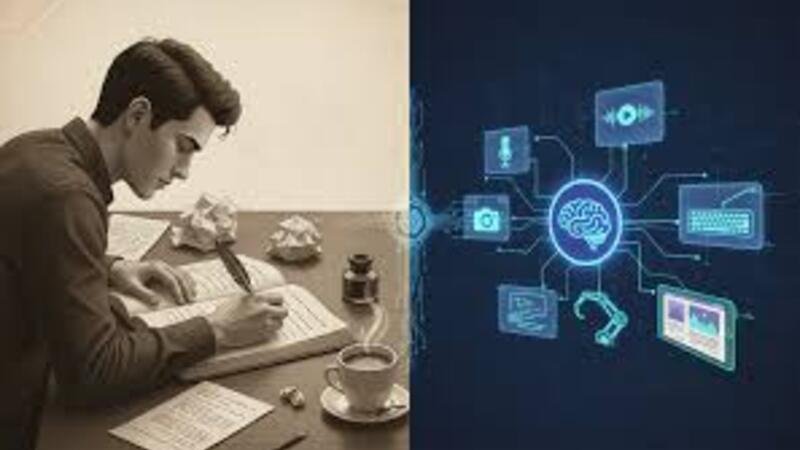
Digital content has become increasingly visual. Businesses use images across websites, social media, presentations, advertisements, email campaigns, and video projects to communicate ideas quickly and keep audiences engaged. As publishing schedules become faster, however, creative teams often face a difficult balance between producing enough content and maintaining consistent quality.
Traditional image production can require photography, illustration, editing, and multiple rounds of revisions. These processes remain valuable, but they may not always be practical for early-stage concepts or fast-moving campaigns. AI-powered visual tools are creating another option by helping users explore ideas and develop image concepts from simple descriptions.
For professional content teams, the technology is less about replacing established creative practices and more about expanding the number of possibilities available during the planning and production process.
The Growing Need for Faster Visual Production
Content teams today often work across several platforms at once. A single campaign might require a collection of website graphics, social media visuals, presentation images, and supporting creative assets. Producing every image from scratch can place considerable pressure on designers and content managers.
This challenge has increased as businesses compete for attention in crowded digital spaces. Audiences have become accustomed to polished visual communication, making generic or poorly matched imagery less effective for many projects.
AI-assisted creation can help address the early stages of this process. An AI picture generator can turn written descriptions into visual concepts, allowing creators to explore different directions before investing significant time in detailed production.
The resulting images still require human review. Composition, relevance, accuracy, and brand suitability need to be evaluated before an asset is published. Used thoughtfully, AI can therefore support faster experimentation without removing professional creative oversight.
Turning Ideas Into Visual Concepts
A major benefit of generative image technology is the ability to move from an abstract idea to a visual concept quickly. Instead of explaining an idea only through written notes, a team can create visual references that make discussions more concrete.
This can be useful during campaign planning. A marketing department developing a seasonal concept, for example, may want to compare several moods, settings, or compositions before choosing a final creative direction. Generating early concepts can make those comparisons easier.
The approach can also support educational, editorial, and social content. Writers and designers can explore imagery for complex topics, while creators can test different visual styles before developing a finished asset.
However, generating an image is only one stage of the workflow. Professionals still need to consider whether the result communicates the intended message and whether its details are appropriate. A generated concept may need editing, refinement, or replacement before publication.
The strongest results usually come when AI-generated concepts are treated as creative starting points rather than automatic final answers.
Supporting Designers and Content Teams
AI image creation can also complement the work of professional designers. Creative specialists frequently spend time exploring possibilities before beginning detailed production. Generative tools can help with this exploratory stage by providing additional visual directions that can be reviewed quickly.
For smaller teams, this can be especially useful. A business without a large design department may need to develop several concepts while working with limited resources. Early visual experimentation can help the team determine what deserves further attention.
Designers can then focus their expertise on tasks where human judgment matters most, including layout decisions, brand consistency, visual hierarchy, and final editing. This creates a workflow in which technology handles part of the exploration while professionals remain responsible for creative direction.
Quality control remains important throughout the process. Generated images can include inaccurate objects, unusual details, or inconsistencies that are not immediately obvious. Reviewing every important visual before publication helps reduce those risks and protects the overall quality of a campaign.
Practical Uses Across Digital Media
AI-generated visuals can fit into many different content workflows. Social media teams can use them to explore concepts for posts and thumbnails, while marketing departments can develop visual directions for campaigns. Businesses can also use generated concepts when preparing presentations, educational materials, or internal communications.
Video production offers another practical application. Before filming or editing begins, teams can use visual concepts to discuss possible scenes, backgrounds, moods, or compositions. These references can make creative conversations more specific and help participants understand the intended direction.
Publishers and content creators can similarly experiment with supporting imagery for articles and other digital resources. The technology is particularly useful when a concept is difficult to represent using conventional stock photography.
Each application still requires appropriate review. Teams should consider brand guidelines, factual accuracy, audience expectations, and any applicable usage requirements. Establishing these standards before publication can make AI-assisted workflows more reliable and easier to manage.
Conclusion
AI-powered image creation is becoming a practical addition to modern content workflows. Its ability to translate written ideas into visual concepts can help teams experiment faster, communicate creative directions more clearly, and support the growing demand for digital imagery.
The technology is most useful when it works alongside human expertise. Designers, marketers, editors, and content creators remain responsible for evaluating whether a visual is accurate, relevant, consistent, and appropriate for its intended audience. Generating an image may take moments, but deciding whether that image serves a genuine communication purpose still requires professional judgment.
As visual communication continues to evolve, organizations will likely place greater emphasis on flexible production processes. Teams that combine efficient AI-assisted experimentation with careful human review can build adaptable workflows while maintaining quality. The future of digital content creation will depend not simply on producing more visuals, but on producing purposeful ones with greater speed, consistency, and creative control.