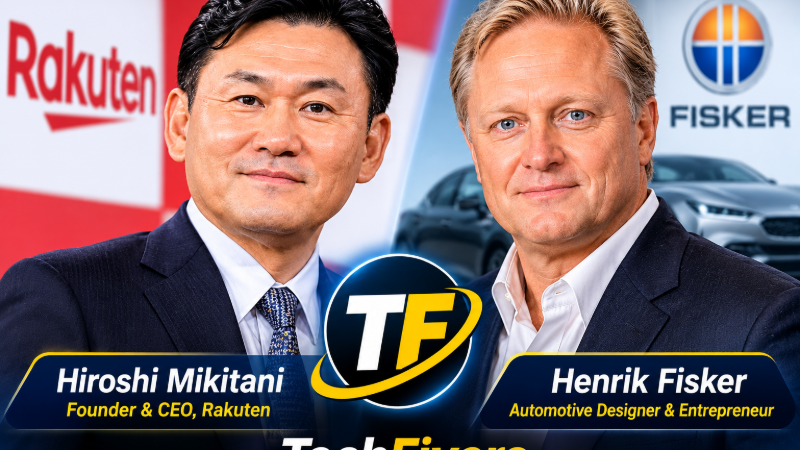
Hiroshi Mikitani and Henrik Fisker are entrepreneurs known for their work in different industries. Mikitani built Rakuten into a major digital services company, while Fisker became recognized for automotive design and electric vehicle ventures.Their careers offer interesting examples of how business leaders turn ideas into products, services, and companies. Although they operate in different sectors, both have explored opportunities created by changing technology and consumer needs.This article compares Hiroshi Mikitani and Henrik Fisker, their professional backgrounds, business approaches, and contributions to innovation.
Who Is Hiroshi Mikitani?
Hiroshi Mikitani is a Japanese entrepreneur and the founder of Rakuten Group. He launched Rakuten in 1997 with the goal of creating an online marketplace where businesses could reach customers through the internet.Over time, Rakuten expanded beyond e-commerce. The company developed services in areas such as digital payments, financial technology, communications, online content, and other internet-based businesses.Mikitani’s career demonstrates how an initial business idea can develop into a wider digital ecosystem. Instead of concentrating on only one service, Rakuten expanded into different areas connected to customers’ everyday needs.
Hiroshi Mikitani’s Early Career
Before establishing Rakuten, Mikitani worked in the financial sector. His experience in banking gave him exposure to business operations, financial decisions, and corporate strategy.He also studied at Harvard Business School, where he earned an MBA. His education and professional experience helped prepare him to pursue entrepreneurship.When Rakuten began operating in the late 1990s, internet shopping was still developing. Many businesses were learning how to use online platforms to reach consumers.Mikitani recognized the opportunity to connect merchants and customers through an online marketplace. This idea became the foundation of Rakuten’s growth.
How Rakuten Developed
Rakuten initially focused on online shopping. Its marketplace allowed businesses to establish digital storefronts and sell products to customers.The company later expanded into additional services. These included financial products, digital payments, telecommunications, and other technology-based offerings.This expansion helped Rakuten become more than a traditional online retailer. Its business model connected different services through a broader customer ecosystem.However, managing multiple business areas also creates challenges. Companies must invest in technology, protect customer information, compete with established brands, and maintain reliable services.Mikitani’s professional journey illustrates the opportunities and complexities of growing a technology business.
Who Is Henrik Fisker?
Henrik Fisker is a Danish automotive designer and entrepreneur. He is known for his work on luxury vehicles and his efforts to develop electric cars.Throughout his career, Fisker has been associated with automotive design and vehicle development. His work has included roles connected with well-known car manufacturers, including BMW and Aston Martin.His design background helped establish his reputation in an industry where appearance, engineering, performance, and brand identity all influence customer decisions.Fisker later pursued entrepreneurship, seeking to bring his own ideas about vehicle design and electric mobility to market.
Henrik Fisker’s Automotive Design Career
Automotive design involves much more than deciding how a vehicle looks. Designers must consider aerodynamics, passenger comfort, safety requirements, manufacturing limitations, and the practical needs of drivers.Fisker’s experience in the automotive industry exposed him to these competing requirements. His work became associated with distinctive styling and premium vehicle design.Working with established manufacturers can provide designers with opportunities to understand how vehicles move from initial concepts to production.This experience can also reveal the difficulties involved in balancing creative ideas with engineering requirements and commercial objectives.
Henrik Fisker and Electric Vehicles
Electric vehicles have become an important part of the automotive industry’s technological development. They offer an alternative to conventional petrol and diesel vehicles, although their environmental impact depends on factors such as electricity generation, battery production, and vehicle use.Fisker pursued electric vehicle ventures as interest in alternative transportation increased.In 2016, he co-founded Fisker Inc. with Geeta Gupta-Fisker. The company sought to develop electric vehicles with an emphasis on design and modern technology.Building an automotive company is particularly demanding. Manufacturers need significant funding, production capabilities, reliable suppliers, regulatory compliance, and strong customer demand.Fisker’s entrepreneurial experience illustrates why developing an attractive vehicle concept does not automatically lead to a sustainable automotive business.
Hiroshi Mikitani and Henrik Fisker: Key Differences
Hiroshi Mikitani and Henrik Fisker share an interest in innovation, but their professional work differs considerably.Mikitani built a digital business ecosystem. Fisker focused on automotive design and electric vehicle entrepreneurship.Their industries also involve different operational requirements. Internet services depend heavily on software, digital infrastructure, customer relationships, and online security.Automotive businesses must manage physical manufacturing, vehicle safety, engineering, inventory, and distribution. These requirements can make vehicle development especially capital-intensive.
Different Industries, Different Strategies
Mikitani’s business strategy involves expanding services and connecting customers with different products and platforms.A digital ecosystem can create opportunities for customers to use multiple services within one broader network. However, it requires ongoing investment, reliable systems, and effective competition with other technology companies.Fisker’s approach focused on vehicle design and mobility innovation. Automotive entrepreneurs must transform ideas into vehicles that can be manufactured safely, sold competitively, and supported after purchase.Both approaches require planning and execution, but their risks and resources are different.
Their Approach to Innovation
Innovation can involve creating an entirely new product or improving how an existing service operates.Mikitani’s career demonstrates innovation through digital commerce and the expansion of internet-based services.Fisker’s work demonstrates innovation through design and efforts to develop electric vehicles.Their experiences show that successful innovation depends on understanding a market, identifying a genuine need, and developing a practical solution.
Are Hiroshi Mikitani and Henrik Fisker Connected?
Hiroshi Mikitani and Henrik Fisker are connected by their broader involvement in entrepreneurship and technology-related industries.However, their professional careers have followed separate paths. Mikitani is associated with Rakuten and its digital services, while Fisker is associated with automotive design and electric vehicle ventures.There is no established public evidence confirming a direct business partnership between them.For that reason, their careers are best compared through their business strategies, industries, and approaches to innovation rather than an assumed personal relationship.
What Entrepreneurs Can Learn From Their Careers
The careers of Mikitani and Fisker provide several useful lessons for people interested in business.
1. Identify a Clear Opportunity
A business idea needs to address a real market opportunity. Mikitani recognized the potential of online commerce, while Fisker pursued opportunities in vehicle design and electric mobility.Entrepreneurs should study customer needs and market conditions before investing heavily in a new venture.
2. Combine Vision With Execution
A promising idea is only the beginning. Businesses also need practical plans, capable teams, sufficient resources, and reliable operations.This is particularly important when a company expands into new markets or develops complex products.
3. Understand Industry Challenges
Every industry has different risks. Digital companies must respond to competition, technology changes, and security concerns.Automotive businesses face additional challenges involving manufacturing, engineering, safety standards, and supply chains.Understanding these factors helps entrepreneurs make more informed decisions.
4. Adapt to Changing Markets
Consumer expectations and technologies continue to evolve. Companies must evaluate new opportunities while remaining realistic about their costs and risks.Adaptation does not mean following every trend. It means identifying changes that are relevant to the business and responding thoughtfully.
5. Build Long-Term Customer Value
A business needs to provide something customers consider useful. Reliable services, well-designed products, customer support, and clear communication can help establish trust.Long-term business development depends on more than attracting attention. It also requires delivering value consistently.
Final Thoughts
Hiroshi Mikitani and Henrik Fisker represent two different approaches to entrepreneurship. Mikitani is known for building Rakuten into a diversified digital services business, while Fisker is recognized for his work in automotive design and electric vehicle ventures.Their careers highlight how innovation can take different forms across industries. Digital platforms and automotive products require different resources and strategies, but both depend on understanding customers and turning ideas into practical offerings.For aspiring entrepreneurs, their professional journeys provide useful examples of the opportunities, challenges, and responsibilities involved in building a business in a technology-driven world.if you need more detail to TECH FIVERS visit.